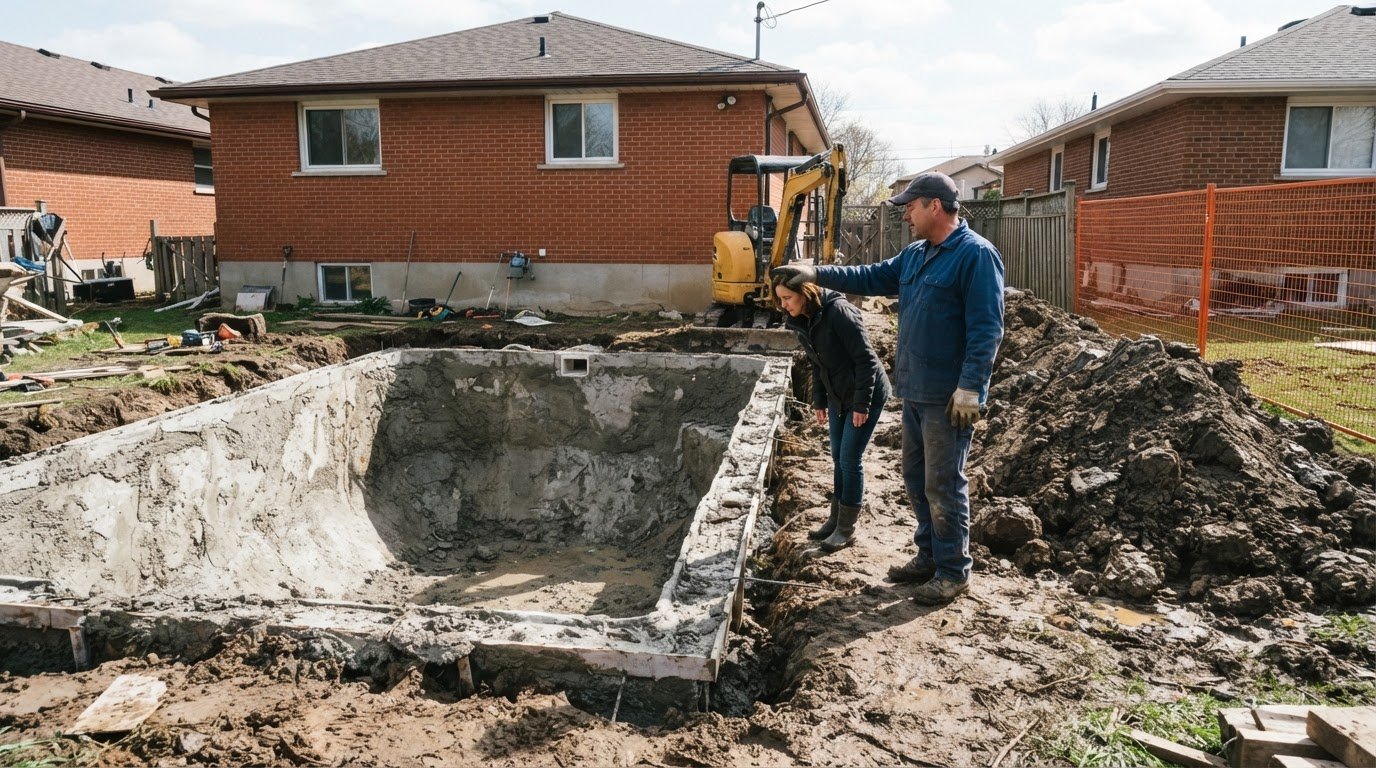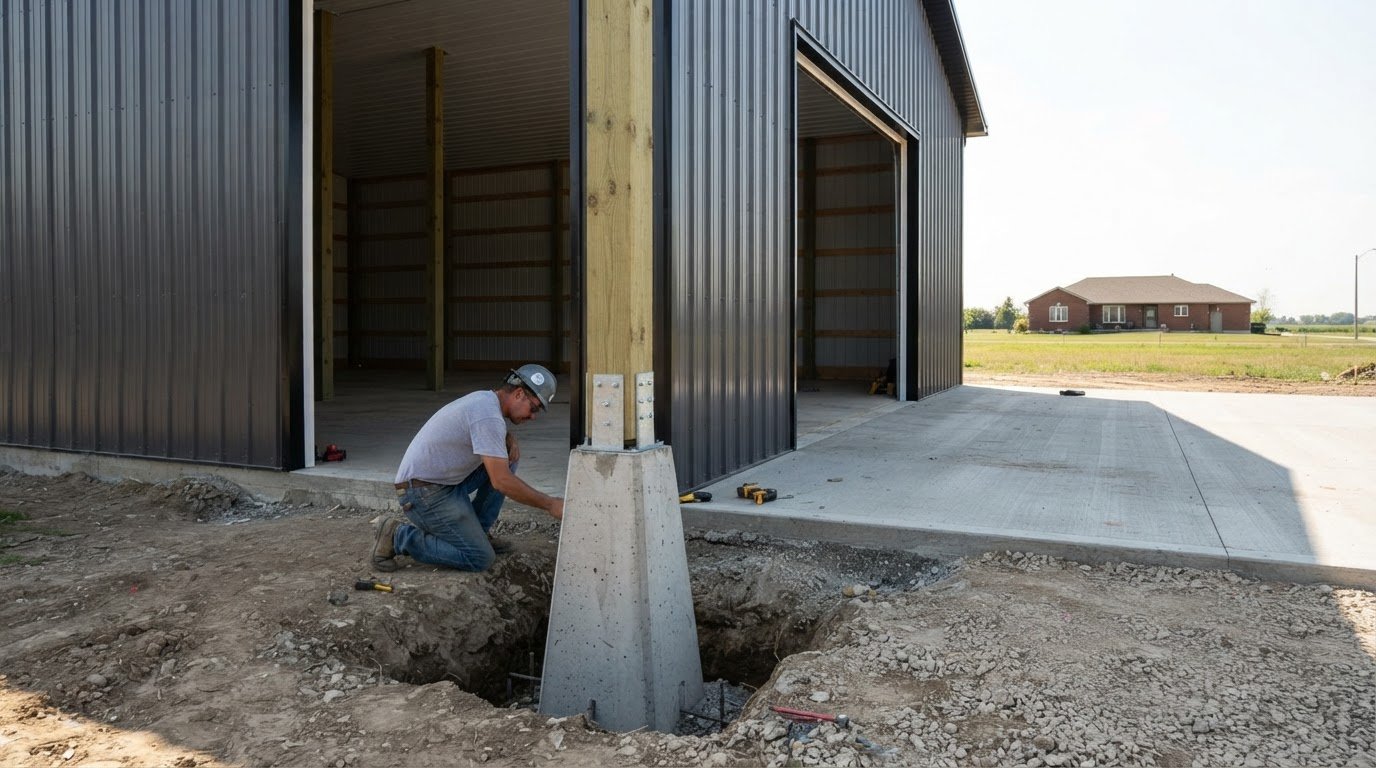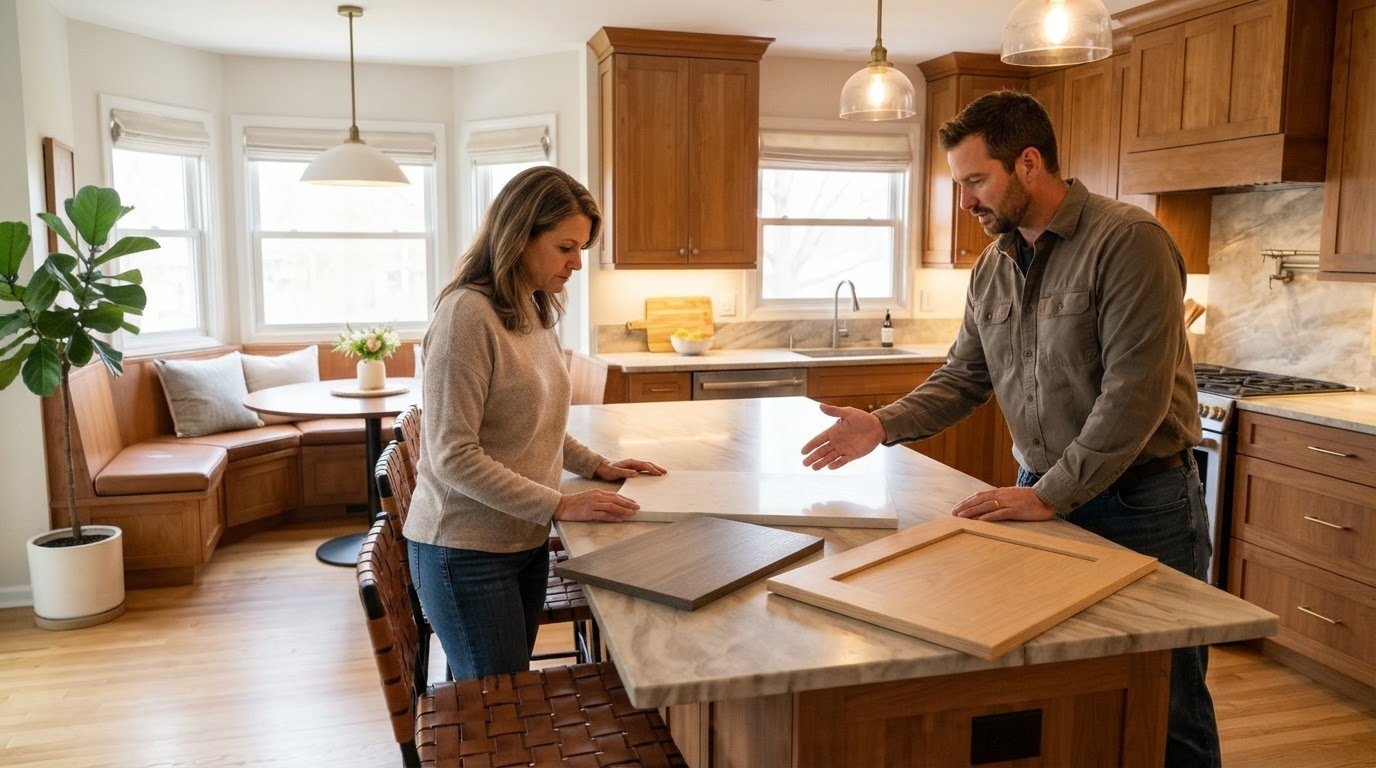
What if the hardest part of a renovation isn’t choosing finishes, but keeping every decision, permit and trade aligned? When different contractors handle different phases, homeowners may need to coordinate schedules, pass along updates and follow up when one task depends on another. That’s why home renovation project management Windsor homeowners can rely on matters: a connected process makes it easier to understand what’s decided, what needs attention and what comes next.
Good project management connects design, permitting and construction, with clear responsibility at each stage. The right level of involvement depends on the project and how much coordination you want to manage yourself. Santarossa Group has served Windsor and Essex County since 1993, handling design, permitting and construction in-house and providing a single point of contact.
In this guide, you’ll learn what effective project management includes, compare self-coordination with a single point of contact, and see how a coordinated local team can help keep a kitchen, basement or other renovation moving in an orderly way.
Key Takeaways
- Home renovation project management Windsor can connect planning decisions with construction, helping you follow the work as it progresses.
- See how a managed renovation moves from defining the scope to completing the work, and where your input helps keep decisions on track.
- Compare self-coordination with delegated coordination to understand the difference in workload, communication and oversight.
- A single point of contact can help you stay involved in important choices without managing every project detail yourself.
Home renovation project management in Windsor: why coordination matters
A renovation brings together connected choices: what the project includes, how the design fits your needs, what permits apply and when construction can proceed. Home renovation project management Windsor homeowners need brings these moving parts into one organized process. Without coordination, a design change might not reach the people carrying out the work, or a scheduling question could leave you uncertain about the next step.
Renovation project management coordinates decisions, people and project phases from planning through construction; construction labour is the physical work completed on site. Skilled trades carry out the renovation, while project management keeps the work, communication and decisions connected.
What does a renovation project manager coordinate?
Coordination begins by defining the scope, then connecting design choices to permitting and construction planning. For example, if you want to change a kitchen layout, clarify that priority early so it can inform the design and the work that follows. Keep track of which decisions are settled and which still need your input. You provide direction on priorities, layout and finishes, and approve key choices. The coordinator organizes the process around those decisions rather than making them for you.
Self-managed project or one coordinated team?
Arranging separate trades yourself gives you direct contact with each person, but it also means managing schedules, sharing updates and following up when one phase depends on another. A coordinated team connects those phases through a single contact, reducing the number of separate conversations you need to manage. You remain involved in design and important decisions, but the coordination workload is different. Consider how much time you can give to scheduling and follow-up when deciding which approach fits.
For homeowners planning home renovations in Windsor and Essex County, Santarossa Group manages design, permitting and construction in-house, providing one point of contact across the process. This approach brings connected responsibilities together so you can stay informed without organizing every phase yourself.
From design to construction: the stages a managed renovation connects
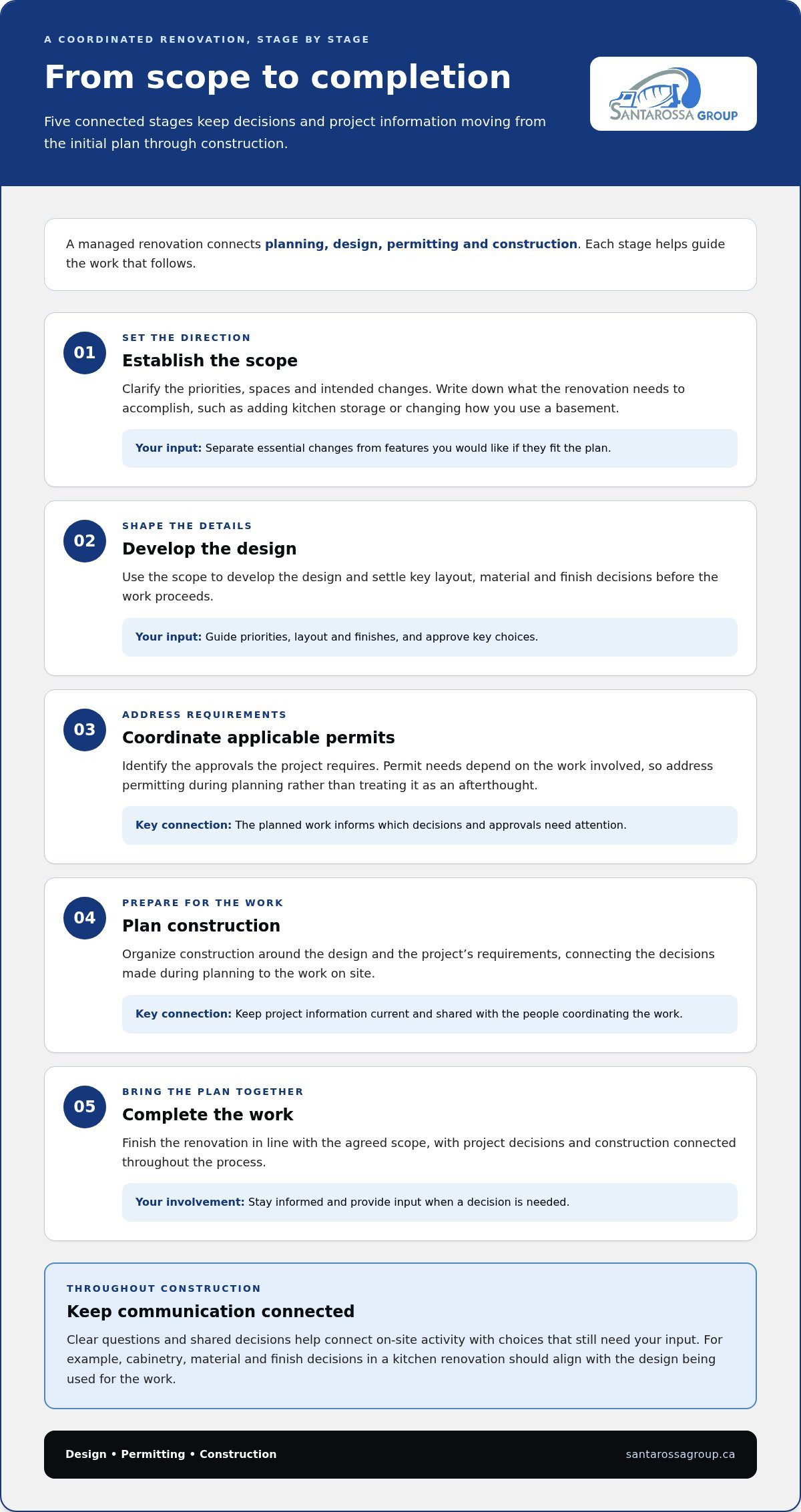
A well-coordinated renovation moves through connected stages, with decisions made in time to guide the work that follows. The project scope sets the direction, design develops the details, permitting is addressed according to the work involved, and construction is planned around the project’s requirements. The work is then completed against the agreed scope. Connecting each phase keeps project information and homeowner decisions moving from the initial plan through construction.
Planning and permitting before construction
Start by writing down what the renovation needs to accomplish, such as adding kitchen storage or changing how you use a basement. Separate essential changes from features you would like if they fit the plan. That scope informs the design and helps identify which decisions and approvals the project requires. Permit needs depend on the work involved, so address permitting during planning rather than treating it as an afterthought. Santarossa Group connects these stages through its Windsor home renovation services.
- Establish the scope: clarify priorities, spaces and intended changes.
- Develop the design: settle key layout, material and finish decisions.
- Address permits: coordinate applicable requirements for the planned work.
- Plan construction: organize the work around the design and project needs.
- Complete the work: finish the renovation in line with the agreed scope.
Construction coordination and homeowner communication
During construction, clear communication connects on-site activity with choices that still need your input. In a kitchen renovation, for example, decisions about cabinetry, materials or finishes should align with the design being used for the work. Keep questions and requested changes clear, and make sure decisions are shared with the people coordinating the project. A coordinated process helps everyone work from current information. Explore kitchen renovation in Windsor as one example of a project with linked design and construction stages.
For homeowners considering home renovation project management Windsor, a single coordinated process can make it easier to understand what’s decided, what needs your input and what comes next. See how Santarossa Group approaches renovation planning and construction.
Does managing a renovation yourself really give you more control?
Coordinating every trade yourself gives you direct access to each conversation, but it also puts scheduling, follow-ups and information-sharing on your plate. Delegating coordination doesn’t mean handing over your design choices. It means separating who organizes the work from who guides the decisions.
| Consideration | Homeowner-led coordination | One coordinated team |
|---|---|---|
| Coordination workload | You organize trades and track dependencies. | The team coordinates project phases. |
| Communication | You relay updates between separate contacts. | A single contact can simplify updates. |
| Decision involvement | You direct choices and manage follow-through. | You guide key choices while coordination is managed. |
| Oversight | You monitor progress across the work. | The team oversees coordination; you stay informed. |
How to judge the right level of project oversight
Consider the renovation’s complexity, the time you can give it and how comfortable you are coordinating multiple phases. A clearly defined project may be easier to organize yourself. A larger home addition, by comparison, can involve more planning decisions and connected stages. You can retain authority over design and priorities while assigning coordination to a team. For context on addition planning, explore the complete Windsor home additions guide.
What clear accountability looks like
An organized process makes responsibilities, communication and decision points clear. You should know who is coordinating the work, which choices need your input and how updates are shared. Before work proceeds, make sure the project scope and key decisions are understood. This structure helps prevent questions from getting lost between phases without removing you from decisions that shape your home. Related considerations are covered in the guide to choosing a Windsor general contractor.
With home renovation project management Windsor homeowners can choose a level of involvement that fits their time and preferences. Santarossa Group connects design, permitting and construction in-house, with one point of contact across the process. Explore renovation project management with Santarossa Group.
How Santarossa Group manages Windsor renovation projects
A renovation feels more manageable when planning and construction are connected. Santarossa Group handles design, permitting and construction in-house, giving homeowners one point of contact throughout these phases. You can discuss the project with a team that coordinates the work and keeps your goals in view, rather than carrying information between separate stages yourself.
What homeowners can expect from a coordinated local team
For a basement renovation, the intended use of the space helps shape design decisions and the planning that follows. For example, identify how you want to use the room and which changes matter most before settling the scope. Permit needs depend on the project, so permitting is addressed as part of the process before construction moves ahead. Santarossa Group’s Windsor basement renovation service brings these phases together through one team. Homeowners across Windsor and Essex County can work with a local general contractor established in 1993.
This approach doesn’t remove you from important choices. You remain involved in decisions about how the space should function and look, while the team coordinates the in-house phases around the project. That connection can make it clearer how planning decisions relate to permitting and construction, without requiring you to manage every handoff yourself.
A straightforward next step for your renovation
Before discussing a renovation, note what you want to improve, which room or area is involved and what matters most in the finished space. It can also help to identify practical constraints, such as which rooms need to remain available to your household. You don’t need every detail settled. A clear starting point gives the project team useful context and helps focus the conversation. This is a practical first step for homeowners considering home renovation project management Windsor, whether the project involves a basement or another part of the home.
When you’re ready to talk through your goals, discuss your renovation project with Santarossa Group. A clear conversation about the space and your priorities can help establish a starting point for planning.
Take the next step with a clear starting point
A renovation begins with a picture of what you want your home to do better. Before moving ahead, note the spaces you’re considering, the changes that matter most and any questions you want answered. You don’t need every detail settled. A few clear priorities can help turn an early idea into a practical conversation about the project’s direction.
Choosing home renovation project management Windsor homeowners can rely on means finding an approach that lets you stay involved in meaningful decisions while project coordination is handled with care. The aim isn’t to rush into construction. It’s to create a thoughtful starting point and a clear path forward for your home.
When you’re ready to discuss your plans, talk with Santarossa Group about your Windsor renovation project. Share what you want to change and what matters most, and take the first step towards a renovation that better suits your needs.
Frequently Asked Questions
Is project management worth it for a home renovation?
It can be worthwhile if coordinating several trades or keeping decisions aligned would take more time than you can give. Home renovation project management Windsor homeowners consider is especially relevant when one change affects other parts of the work. Before deciding, weigh the project’s scope against the time you can spend arranging communication and tracking next steps. A smaller, straightforward job may need less coordination.
What is included in home renovation project management?
The responsibilities depend on the project and how it is managed. At Santarossa Group, homeowners have a single point of contact, with design, permitting and construction handled in-house. To make coordination more useful, prepare a list of priorities, questions and practical constraints, such as how your household uses the space. That context helps keep planning choices connected to your day-to-day needs.
How involved do I need to be during a managed renovation?
You’ll still need to share your goals and make choices about how the finished space should look and function. Your involvement may increase when the project requires decisions about layout, finishes or how to address an unexpected condition. Set aside time to review options and respond to questions as they arise. Clear priorities at the outset can help you make those decisions with greater confidence.
Can I stay in my home during a renovation?
That depends on which rooms are affected, whether you can access essential areas and how the work disrupts daily routines. A kitchen renovation, for instance, can make meal preparation more difficult; bathroom work may affect access to washing facilities. Discuss these practical details during planning. Consider which rooms must remain usable, who needs access and what temporary arrangements could help your household manage the disruption.