A polished quote can’t prove a contractor’s work will last. Knowing how to vet a contractor in Ontario means reviewing completed projects similar to yours, speaking with past clients, and comparing at least three written estimates before deciding. Look for clear scope, materials, timing, and payment terms, not just the lowest price.
It’s reasonable to want confidence that the person working on your home can deliver the quality you expect. A careful review can help you spot gaps before work begins and make a more informed choice. This guide explains how to vet a contractor in Ontario by reviewing past work, contacting references, comparing quotes fairly, and recognizing paperwork or payment red flags, so you can move forward with greater peace of mind.
Key Takeaways
- Compare at least three written estimates, matching the work, materials, timeline, and fees before weighing the price.
- Use references from similar completed projects to learn about workmanship, communication, and how issues were handled.
- Review relevant credentials and request current proof of liability and workers’ compensation coverage.
- Get the scope, schedule, permits, and staged payment terms in a written contract before work starts, and be cautious about large upfront payment requests.
How many contractor quotes should I collect for comparison?
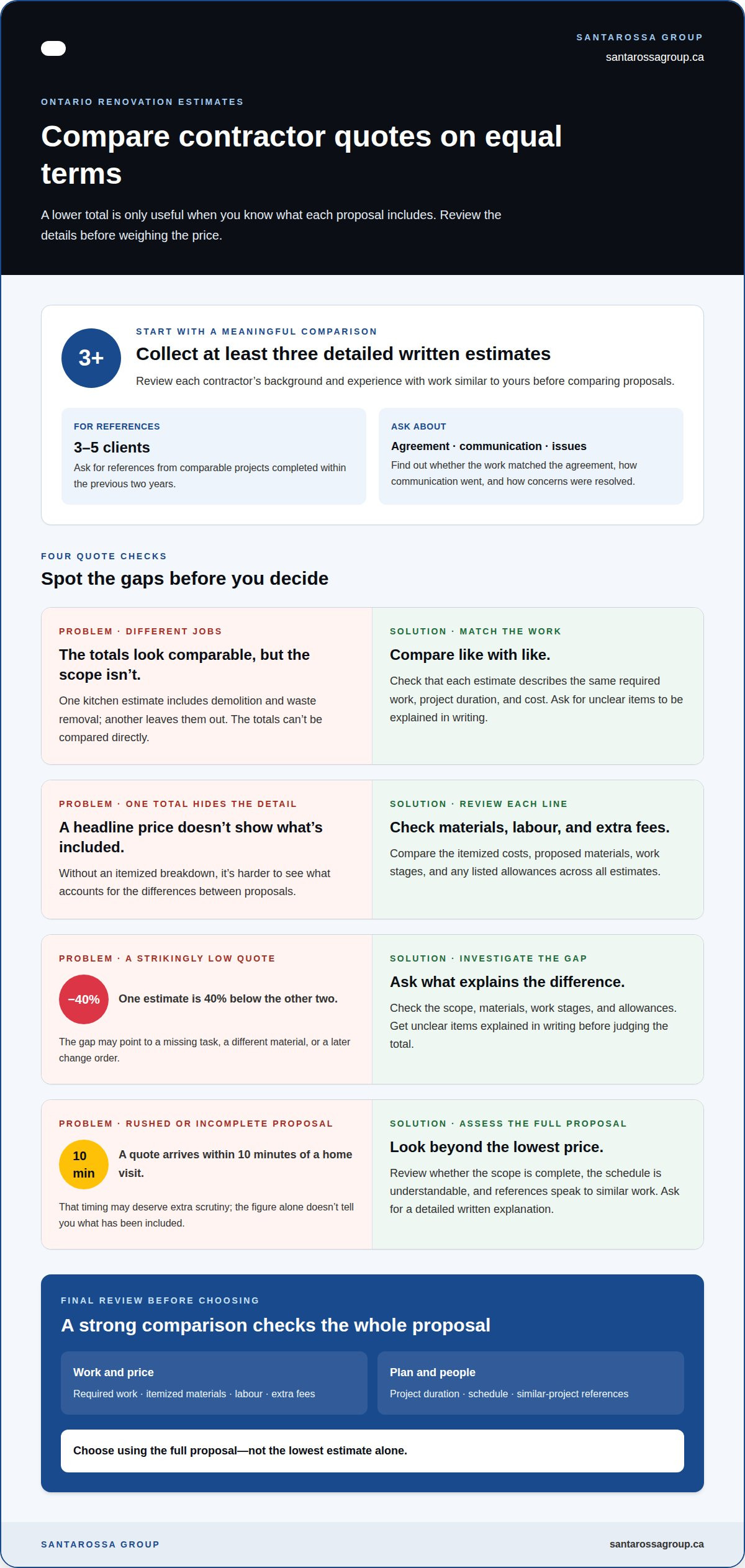
- Start with at least three detailed written estimates for your renovation. Three proposals give homeowners a stronger basis for comparing scope, materials, timing, and price. Before comparing them, review each contractor’s company background and experience with work similar to yours. Ask for three to five references from comparable projects completed within the previous two years. Contact past clients and ask whether the work matched the agreement, how communication went, and how issues were resolved.
- Check that each estimate describes the same job. A written estimate should set out the required work, project duration, and cost, with an itemized breakdown of materials, labour, and extra fees. For example, if one kitchen renovation quote includes demolition and waste removal but another does not, the totals aren’t directly comparable. Ask for unclear items to be explained in writing so you can compare like with like.
- Compare details, not just totals. A dated quotation should clearly describe the work, and the home renovation contract should include everything promised for the agreed price. Review the proposed schedule, including start and completion dates and arrangements for reasonable delays. Then compare materials, work stages, and any listed allowances across all estimates. A quote 40% below the other two deserves careful scrutiny; a missing task, different material, or later change order may explain the gap.
- Make the decision using the full proposal. Don’t choose a contractor solely because the estimate has the lowest price. Check whether the scope is complete, the schedule is understandable, and the contractor’s references speak to similar work. A quote provided within 10 minutes of a home visit may deserve extra scrutiny. Ask for a detailed written explanation before relying on that figure. A consistent proposal makes it easier to judge what each contractor has included and where the differences lie.
How can I verify a contractor’s past work quality?
Ontario’s Consumer Protection Act requires home-renovation contracts over C$50 to be in writing. Contracts signed in a consumer’s home have a 10-day cooling-off period.
- Ask for examples of completed projects similar to yours, then assess the finished details. For a bathroom renovation, look closely at tile alignment, fixture installation, and how edges meet. References can tell you whether the work matched the agreed scope and how the contractor handled concerns. Request current proof of liability and workers’ compensation insurance, and confirm that the named business matches the contractor you’re considering.
- Check coverage through the appropriate channels. You can search the Workplace Safety and Insurance Board (WSIB) website for a registered business. Ask for current proof of liability insurance and workers’ compensation coverage rather than relying on a verbal assurance. For electrical work, use the Electrical Safety Authority to check whether the electrical contractor is licensed in Ontario. Certain trades, including plumbing and electrical, require certification through Skilled Trades Ontario.
- Read the contract for clear, measurable commitments. It should describe the work, materials, main stages, start and finish dates, arrangements for delays, payment schedule, and applicable warranties. Compare these details with what the contractor promised during planning. A vague scope makes it harder to assess whether the completed work meets the agreement. Keep the signed contract, change approvals, payment records, and dated photos together as the project progresses.
- If a contractor abandons the job or delivers poor work, document unfinished or defective areas with dated photos, save all communications, and write down the outstanding items. Ontario’s Small Claims Court is an option when the amount involved is under C$35,000. For a renovation that needs a clearly defined scope, reviewing home renovation planning can help you understand the work involved before comparing proposals.
Finding contractors through referrals and directories
Use personal recommendations, project-specific references, and Ontario directories to build a shortlist. Then compare what each source can tell you about the contractor’s work and business history.
-
Ask for personal referrals and client references
Ask neighbours, friends, or colleagues who recently completed similar renovation work to describe their experience. A referral is most useful when the project involved comparable work, such as a foundation or patio, rather than a general recommendation. Ask the contractor for client references, then speak with those homeowners directly. Find out whether the contractor communicated clearly, kept the agreed scope in view, and addressed concerns. Treat a personal connection as a starting point, not proof of quality.
-
Check references, past projects, and online reviews
Ask references about the finished work and what happened after the final payment. Questions about schedule changes, site organization, and resolving defects can reveal details that project photos won’t show. If you can view a completed project, inspect the finishing details and whether the work appears consistent throughout. Read online reviews for specific examples, not just star ratings. A pattern of similar comments may be more informative than one unusually positive or negative review.
-
Search directories and compare the details
For builders and sellers, use the Ontario Builder Directory to look up licence status and disclosable regulatory history from the last 10 years. Search by company name, a director’s name within the company, licence number, or head office location; profiles may also show licence conditions and history. RenoMark’s directory lists renovators who agree to follow a code of conduct and provide insurance. Treat directory entries as one part of your review, then compare the findings with references and project examples. Before paying a deposit, ask how the contractor will explain responsibility for permits and project stages in writing. This helps you judge the protection offered by clear communication, not a directory listing alone.
Recognizing missing paperwork and upfront-payment red flags
Before hiring, get the agreement and payment terms in writing. Warning signs include missing business details, unclear permit responsibilities, and pressure to pay before you’ve chosen a contractor.
-
Check for missing paperwork
Confirm that the contractor provides valid business registration details and a written contract before work starts. The contract should describe the work, materials, schedule, delay arrangements, payment schedule, and applicable warranties. Ask who will obtain required permits, and make that responsibility explicit in the agreement. Request current proof of liability insurance. Don’t sign a blank or incomplete document, and don’t pay before deciding whom to hire.
-
Assess upfront-payment red flags
Review the deposit amount and payment schedule before agreeing to proceed. The Ontario government’s home-renovation guide suggests keeping a deposit to no more than 10% of the total. A request for 30% or more before work begins is a significant warning sign. Payments should be tied to clear project stages, not vague promises. Never pay the full amount before the work is finished, and keep receipts for every payment.
-
Recognize contractor scam warning signs
Be cautious if a contractor pressures you to decide immediately, asks for payment before you’ve made your choice, or refuses to provide paperwork. A quote far below the others can also deserve closer review; the lowest figure may omit work or materials. Ontario home-renovation contracts over C$50 must be in writing under the Consumer Protection Act. For contracts signed in your home, the Act provides a 10-day cooling-off period.
If a contractor won’t put the scope, permits, or staged payments in writing, pause before proceeding. Use these checks to prepare for a clearly documented project, then discuss your renovation plans.
Santarossa Group
Santarossa Group is a natural next step when your project involves a home addition or renovation and you want one team coordinating the work. The group manages design, permitting, and construction in-house, giving homeowners a single point of contact through the project. Its renovation work includes basements, bathrooms, and kitchens.
Use the checks above to clarify your priorities and understand what a complete proposal should cover. Then discuss your project scope and the improvements you have in mind with Santarossa Group. Contact Santarossa Group to talk through your renovation or addition.
Turn your research into a clear project plan
Once you’ve selected a contractor, focus on the decisions that will shape the work. Consider how the finished space should support your household, which choices need to be settled early, and how construction may affect your daily routine. Clear priorities make planning conversations more focused and help keep the project aligned with your needs.
Knowing how to vet a contractor in Ontario can help you approach the next stage with greater clarity. As you move from research to planning, keep your goals for your home at the centre of each discussion. Taking care with how to vet a contractor in Ontario can help you feel prepared to discuss the project and decide whether the proposed approach suits your priorities.
Contact Santarossa Group to discuss your project and take the next step at a pace that feels right for you.
Frequently Asked Questions
How do I determine if a contractor is qualified for my renovation?
Match the contractor’s experience and credentials to the specific work your renovation requires. For example, a basement project involving structural changes calls for relevant project experience, while electrical work requires an appropriately qualified trade professional. Ask who will coordinate specialized trades, permits, and inspections, then compare the answers with the proposed scope. References from projects with similar requirements can help you assess how the contractor manages that work.
What should I do if a contractor’s quote seems unusually low?
Ask the contractor to explain the difference in writing before you decide. Compare each quote line by line, including demolition, disposal, materials, finishing, and allowances. A lower total may reflect a different specification, not a better deal. For example, check whether both proposals include the same flooring material and installation work. If the scope still doesn’t match after clarification, don’t treat the totals as equivalent.
What should I include in my contractor interview questions?
Ask who will be your main contact, who will supervise the site, and how schedule changes will be communicated. Clarify how proposed changes are documented and approved before extra work begins. For a kitchen renovation, ask how the work sequence will affect access to the room and which decisions you need to make before installation. The answers should help you understand responsibilities and how project updates will be handled.
How do I check a contractor’s licence and registration in Ontario?
Ontario doesn’t have one provincial licence for general renovation contractors, so check the requirements for the work involved. Electrical contractors must be registered with the Electrical Contractor Registration Agency, and the Electrical Safety Authority provides a way to check electrical contractor licensing. For new home builders and sellers, the Home Construction Regulatory Authority handles licensing, and applicable homes must be enrolled with Tarion. A renovation contractor’s requirements can differ from a new-home builder’s.
How can I verify an Ontario contractor’s insurance and WSIB coverage?
Request current proof of liability insurance and workers’ compensation coverage, then check that the business name matches the one on your estimate. You can search the Workplace Safety and Insurance Board website for a registered business. If the certificate names a different company or appears out of date, ask for current documentation before work begins. Keep the certificate with your agreement and project records.
How do I check a contractor’s references, reviews, complaints, and legal history in Ontario?
Use more than one source, since customer reviews and regulatory records show different things. For builders and sellers, the Ontario Builder Directory provides licence information and disclosable regulatory history from the last 10 years. Search using the company name, a director’s name, licence number, or head office location. Then compare any relevant record details with client references and review comments, noting whether they describe similar projects or concerns.