A contractor’s calendar can shape your renovation just as much as the estimate. The right questions to ask a general contractor in Windsor cover more than price: they clarify who will communicate with you, what the contract includes, how payments follow progress and when work is scheduled. In Ontario, consumer protection guidance requires a written contract for home renovation work valued at more than C$50. If an estimate forms part of the contract, the Government of Ontario says the final price generally can’t exceed it by more than 10% unless you agree to additional work or a revised price.
It’s reasonable to want clear answers before committing, especially when a project will affect your home and daily routine. These questions to ask a general contractor in Windsor can help you assess reliability, payment processes, communication, and scheduling, including how changes are handled. They also help you review the written agreement and discuss unexpected issues before work begins. A straightforward conversation now can set practical expectations for the project.
Key Takeaways
- Put the scope, materials, communication plan and process for handling unexpected issues in writing before work begins.
- Ask about similar completed projects and speak with past clients to understand how the contractor manages the work and follows through.
- Clarify the deposit and connect later payments to clear progress milestones; Ontario recommends keeping renovation deposits to no more than 10% of the total project cost.
- Discuss start dates, daily work hours and how schedule changes will be communicated so you can plan around the renovation.
1. Project communication and written contracts
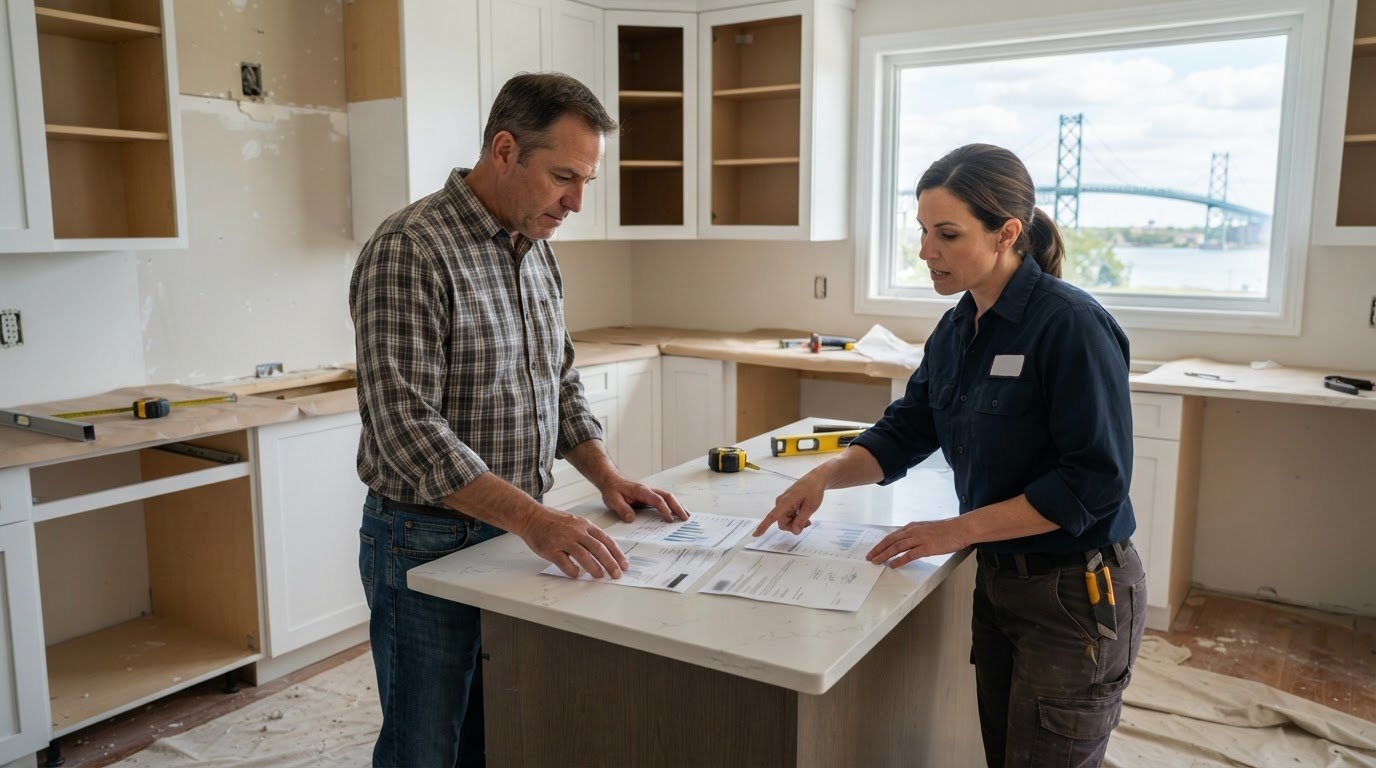
Before a renovation starts, agree on one point of contact and how you’ll receive updates. Ask who will answer questions, how progress will be reported, and how decisions will be recorded. For example, confirm that changes will be documented in writing and added to the project file. Make sure verbal discussions that affect the work are reflected in the agreement.
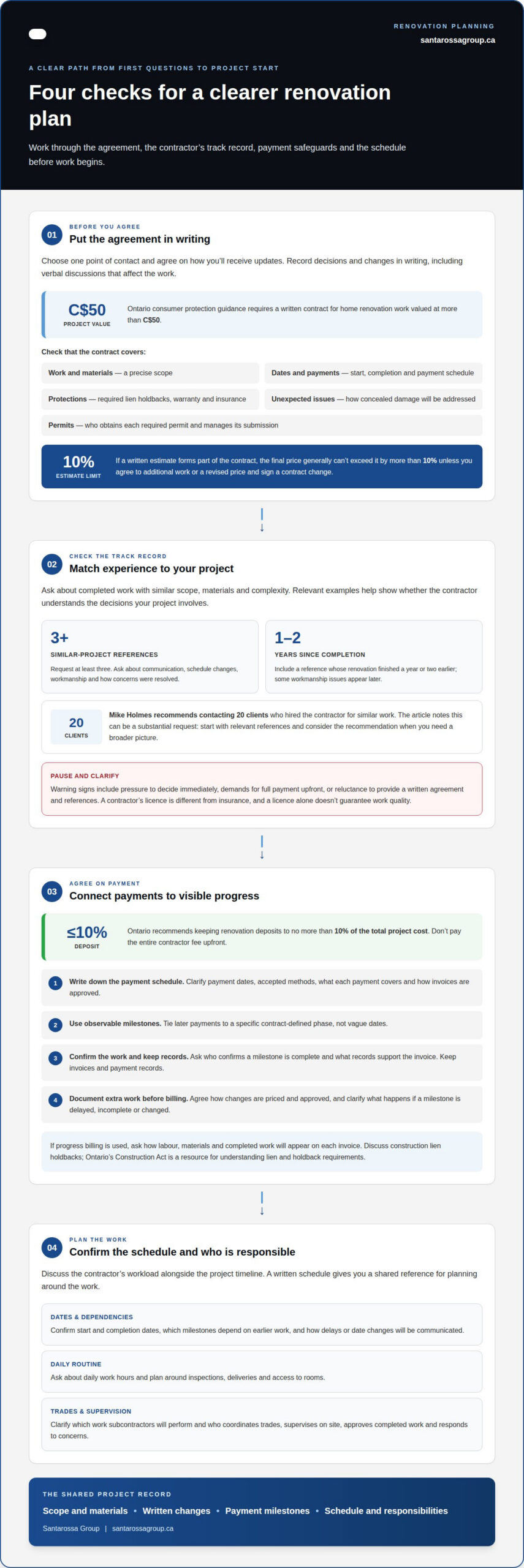
Ontario consumer protection guidance requires a written contract for home renovation work valued at more than C$50. Make sure the agreement describes the work and materials, start and completion dates, payment schedule, required lien holdbacks, warranty terms, and insurance coverage. It should also explain how the team will address concealed damage or other unexpected problems. Clear details give both parties a shared record of the agreed scope.
According to the Government of Ontario, if a written estimate forms part of the contract, the final price cannot exceed it by more than 10% unless you agree to a new price and sign a contract change. The Government of Ontario also says a contractor cannot charge more than 10% above the estimate unless you agree to new work or a new price and sign a contract change. Ask how proposed changes will be priced and documented before approving them.
Permits may be needed for structural changes, additions, certain plumbing alterations, and basement conversions. Ask who will obtain each required permit and manage its submission, and make sure that responsibility is stated in the agreement.
Discuss the project timeline alongside the contractor’s workload. Ask which milestones depend on earlier work, how delays will be communicated, and who will let you know if dates change. A written schedule helps you plan around inspections, deliveries, and access to rooms.
Clarify which work subcontractors will perform and who will supervise them on site. Confirm the role of the person coordinating trades, approving completed work, and responding to concerns. For kitchen, bathroom, or basement renovations, this keeps responsibility clear at each stage.
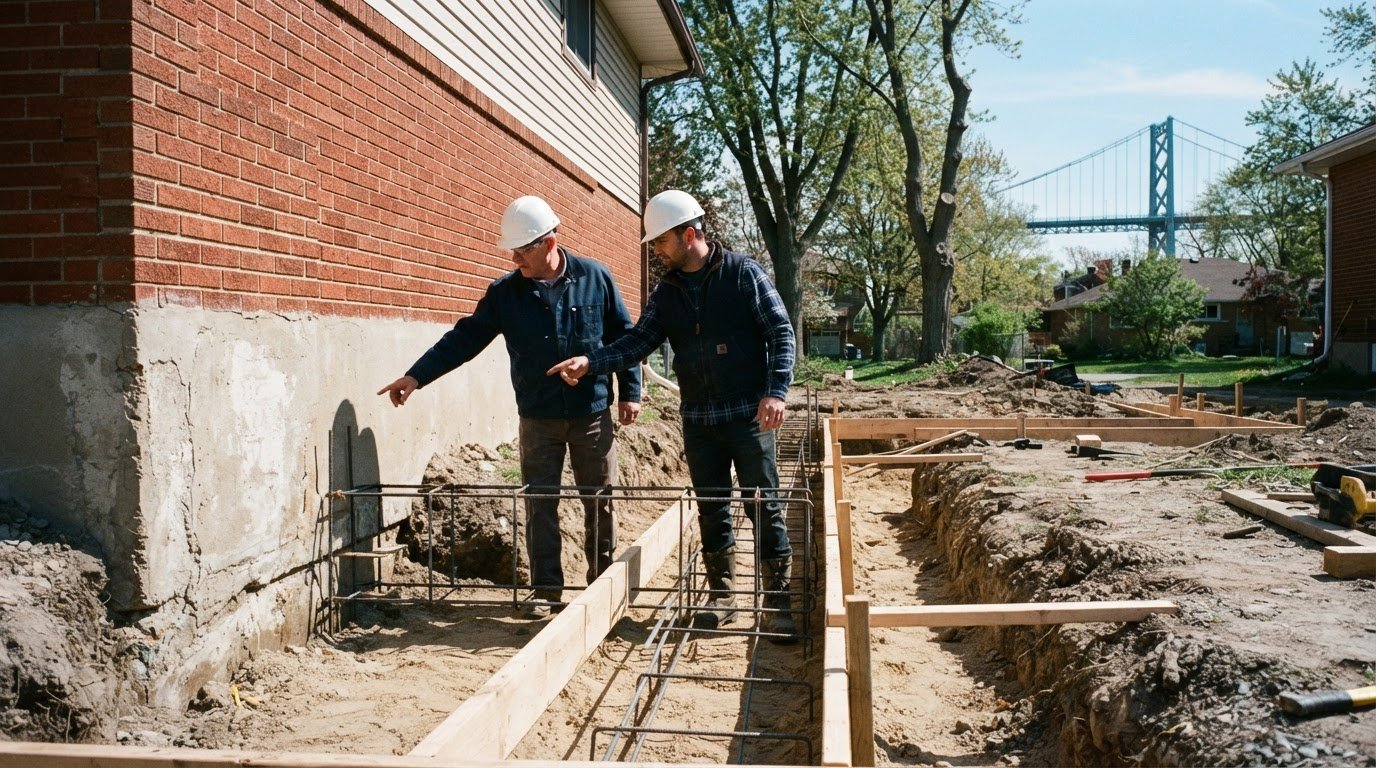
Describe the project scope precisely. A kitchen renovation may involve several trades, while a concrete foundation follows a different sequence. Ask about relevant experience and examples that match your project type.
2. Contractor experience and reliability
Experience matters most when it matches your project, not simply the contractor’s years in construction. Ask about completed work similar in scope, materials, and complexity to your plans. For a concrete foundation, discuss comparable foundation projects; for a patio, ask about drainage, preparation, and finishing. Specific examples can show whether the contractor understands the decisions your project involves.
Request at least three references from clients with similar projects. Ask about communication, schedule changes, workmanship, and how concerns were resolved. Include a reference whose renovation finished a year or two earlier, since some workmanship issues become apparent later. Local references can also help you understand whether the contractor has experience with homes and project conditions in Windsor.
Mike Holmes recommends contacting 20 clients who hired the contractor for similar work. That can be a substantial request, so start with relevant references and consider the recommendation when you need a broader picture. Ask each reference about one concrete example, such as how the team handled a change or completed a difficult stage. A contractor’s licence is different from insurance, and a licence alone doesn’t guarantee work quality.
Warning signs of contractor scams or disputes in Windsor include pressure to make a decision immediately, demands for full payment upfront, or reluctance to provide a written agreement and references. Treat changing explanations about scope, payments, or responsibility as a reason to pause and clarify terms before signing.
For a concrete project, compare experience against the work itself: preparation, sequencing, supervision, and communication all matter. If your plans involve a new foundation, explore concrete foundation projects as a relevant next step. Matching the contractor’s experience to the specific work helps keep expectations grounded from the outset.
3. Deposits and milestone-based payments
Before work begins, ask about the deposit, payment dates, accepted payment methods, and invoice approval process. The written payment schedule should show what each payment covers, so you can match charges to the agreed work. Clarify how extra work is priced and approved, and keep records of invoices and payments. A clear billing process helps prevent misunderstandings about what remains payable.
For renovation work, keep the deposit to no more than 10% of the total project cost. Don’t pay the entire contractor fee upfront. A deposit secures the start of the project, while later payments should follow defined progress milestones. Ask what happens if a milestone is delayed, incomplete, or changed, and how the contractor will document that change before billing.
Payment milestones should relate to observable work, not vague dates. For example, a payment stage could be tied to a specific phase identified in the contract. Ask who confirms that the work is complete and what records support the invoice. This makes the balance owing easier to understand and reduces disputes about whether a billing milestone has been reached.
Some contractors use progress billing at month-end, based on each trade and its percentage of completion. If this approach applies, ask how labour, materials, and completed work will appear on each invoice. Also discuss construction lien holdbacks: Ontario’s Construction Act is a resource for understanding lien and holdback requirements. Clear records help both parties understand payment status and potential liability.
A Windsor contractor’s estimate depends on the project, its scope, materials, site conditions, labour, and required work. Ask whether the estimate is fixed or based on allowances, and how changes affect the total. For example, a change in selected materials may alter the work or estimate. Agree that extra work requires written approval before it proceeds, and keep each signed change with the contract.
4. Work schedule and contractor availability
A start date is only one part of a workable renovation schedule. Ask when the crew expects to arrive, what hours work will take place, and which person will update you if plans change. You can also ask when work will stop each day. For example, 2:00 in the afternoon may matter if you need access to a room or want to plan around household routines.
Discuss the contractor’s workload before agreeing to dates. Ask whether the same team will handle each stage, how other active projects could affect scheduling, and what happens if a trade or delivery is delayed. A clear answer should explain how changes will be communicated, who will provide updates, and whether the next milestone needs to move. Record these details in the project schedule.
Ask what the schedule depends on. Inspections, material deliveries, and work completed by earlier trades can affect when the next stage begins. A delay in one task, for example, may change the expected start of the following task. Ask how the contractor will explain the change and update the timeline, rather than relying on an informal estimate of when work will resume.
Daily routines deserve attention too. Agree on site access, areas that must remain usable, and the cleanup process. Contractors commonly clean the jobsite daily to help keep it safe; discuss what “clean” means for your home and how dust will be contained. A specific plan is more useful than a general assurance, especially when work affects shared spaces.
Before signing, make sure the schedule identifies expected start and completion dates, key stages, and how updates will be delivered. Ask who supervises the site when the main contact is away, and how you’ll receive notice about absences or changes. These details help you judge whether the proposed timing fits your household and the work involved. For a project that needs organized scheduling and oversight, discuss your renovation plans and outline the timing that matters to you.
Santarossa Group
Santarossa Group manages home projects with one point of contact across design, permitting, and construction. For a home addition or renovation to your basement, bathroom, or kitchen, discuss the project scope, communication expectations, schedule, and payment structure. A free, no-obligation site evaluation and detailed proposal with clear pricing provide a practical next step for Windsor-area homeowners.
Use these questions as a practical framework for your first discussion. Bring your priorities, the areas of your home affected, and any timing considerations you need to plan around. These details can clarify whether the proposed work aligns with your goals and what decisions come next.
Contact Santarossa Group to discuss your renovation plans.
Turn Your Plans Into a Clear Next Step
The questions to ask a general contractor in Windsor can turn a broad idea into a focused project conversation. Before moving ahead, consider what you want your home to do better, which spaces matter most, and what details still need decisions. A clear sense of your priorities gives the first planning discussion a practical starting point.
Santarossa Group works with Windsor-area homeowners on Home Additions, Basement Renovations, and Bathroom Renovations. Whether you’re considering a larger change or improving a specific area, bring your goals and questions to the conversation. Describe the work you have in mind and arrange a free, no-obligation site evaluation to discuss how it could take shape.
With a clear direction, you can move forward thoughtfully and make decisions that fit your home. Contact Santarossa Group today to discuss your project plans.
Frequently Asked Questions
Why Do These Questions Matter?
These questions help you understand how a contractor will manage decisions, changes, and day-to-day work before your home is affected. Clear answers can show whether expectations are aligned, including who approves a material change and how site access will be handled. For a Windsor renovation, discussing these details early gives you a practical basis for deciding whether the working relationship fits your needs.
What questions should I ask a general contractor in Windsor, Ontario before hiring?
Ask who will coordinate the work, how you’ll receive updates, and how changes will be recorded. Discuss experience with your project type, who supervises subcontractors, and how the schedule accounts for deliveries or inspections. Also ask how the site will be protected and how concerns are handled. Specific examples help you understand the contractor’s process beyond general assurances.
How can I verify a general contractor’s licence, insurance, and WSIB coverage in Windsor?
Ask for relevant licence details and current insurance documentation, including coverage dates and limits. A licence and insurance serve different purposes, and a licence alone doesn’t establish workmanship quality. Ask what workers’ compensation coverage applies to employees and subcontractors, and request supporting documentation. Confirm that the documents match the business carrying out the work before construction begins.
Does Windsor, Ontario require general contractors to be licensed or registered?
Don’t treat a general contractor’s licence as proof that every trade on a project is covered. Requirements can depend on the specific work being performed. For example, electrical work in Ontario may require a Licensed Electrical Contractor and applicable Electrical Safety Authority notifications. Ask which trades are involved and who is responsible for ensuring required credentials and notifications are in place.
What should a general contractor’s written contract include in Ontario?
A useful contract should make clear what is included, what is excluded, and how the finished work will be assessed. For example, a room-by-room scope can clarify whether painting, fixtures, or cleanup are part of the agreed work. Keep signed revisions with the original agreement, and make sure each change identifies the affected work. This creates a clear record if expectations differ later.
How can I check a Windsor contractor’s references, reviews, and past projects?
Look for examples that match your project’s scope and complexity, then compare them with the contractor’s references and public reviews. Focus on details such as how the finished space functions, whether the stated scope matches the visible work, and how concerns were resolved. Consistent feedback across different sources can provide a fuller picture than a single review or polished project photo.