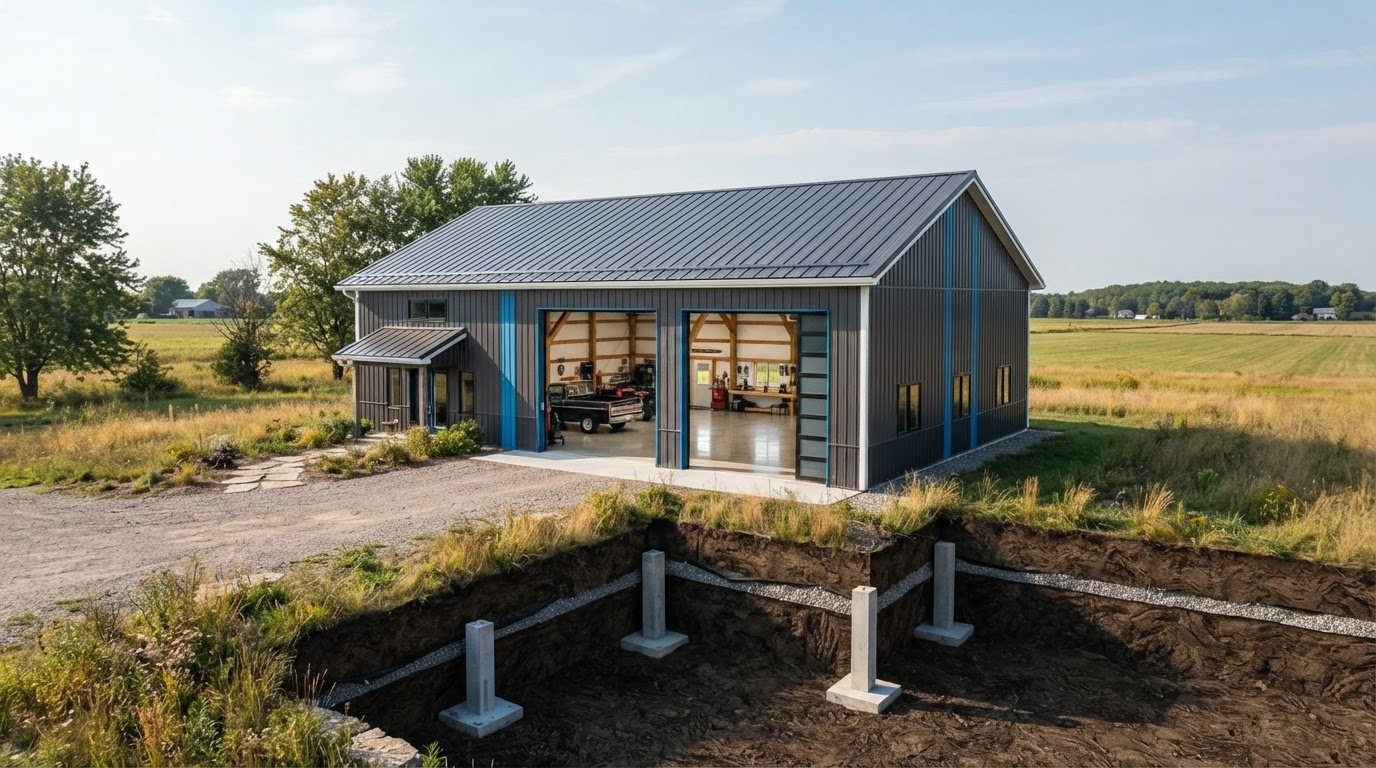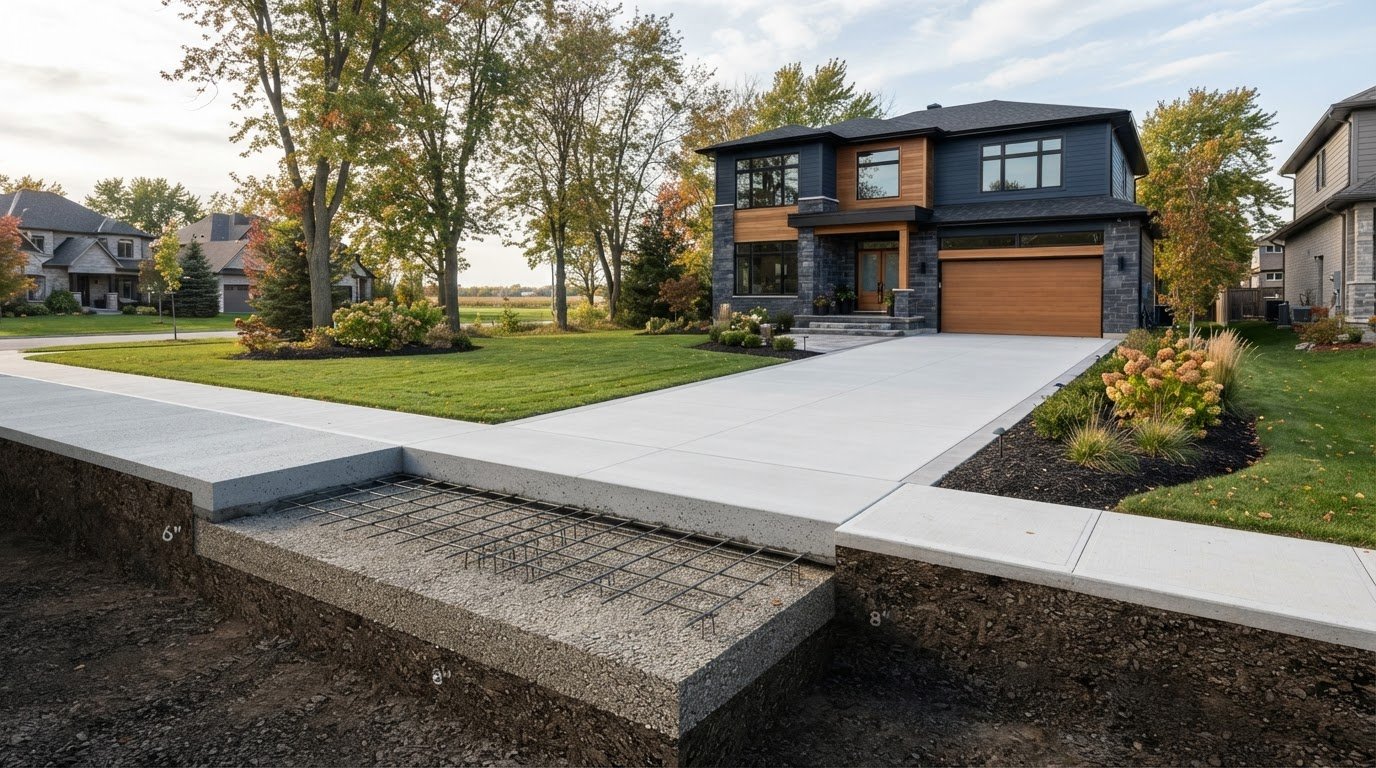
The lower-cost foundation can become the more expensive decision if post rot shortens your pole barn’s useful life. That’s the question behind Perma-Column vs pressure treated post: pressure-treated lumber can seem like a sensible choice, but Windsor’s damp, clay-heavy ground makes long-term performance a real concern. It’s reasonable to ask whether the upgrade is worth it.
At the heart of the comparison is the post’s contact with soil, especially around ground level, where moisture can put embedded wood at risk. Perma-Columns use an engineered concrete foundation connection to keep structural wood out of the ground, offering a durable option for a building intended to serve for decades.
In this guide, you’ll learn how the two systems differ in longevity, how local soil conditions factor into foundation planning, and what to weigh when judging the long-term return on your investment. Santarossa Group has served Windsor since 1993 and specializes in engineered post foundations, bringing local experience to a choice that deserves more than a quick comparison of upfront costs.
Key Takeaways
- Learn why the ground-level point where a wood post meets soil is especially vulnerable to moisture and decay.
- See how an engineered concrete base keeps the structural wood above ground, away from direct soil contact.
- Compare Perma-Column vs pressure treated post options and weigh durability alongside installation considerations.
- Understand why Windsor and Essex County soil conditions matter when choosing a foundation for a pole barn built to last.
The Foundation Dilemma: Why Post Rot is the Silent Killer of Pole Barns
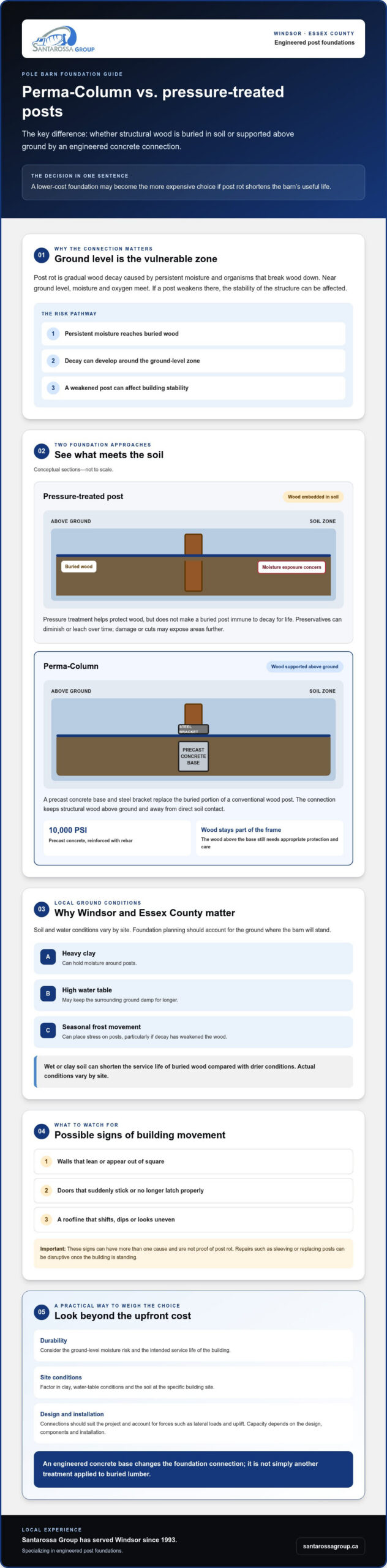
Post rot is the gradual decay of wood exposed to persistent moisture and organisms that break it down. In post-frame construction, embedded posts transfer building loads into the ground, as outlined in this overview of post-frame construction. The vulnerable point is often near ground level, where oxygen and moisture meet. As wood weakens there, a single compromised post can affect the stability of the structure.
Pressure treatment helps protect wood, but it doesn’t make a buried post immune to decay for life. Preservative chemicals can diminish or leach from treated wood over time, and damage or cuts may leave areas more exposed. That’s why concern about post rot isn’t just a matter of appearance: it can become a structural issue that’s difficult to see until movement appears.
The Reality of Pressure-Treated Wood in Ontario Soil
Windsor-area soil conditions deserve careful consideration. Heavy clay can hold moisture, and sites with a high water table may keep the ground around posts damp for longer. Wet or clay soil can shorten the service life of buried wood compared with drier conditions. Seasonal frost movement can also place stress on posts, particularly if decay has already weakened the wood. Actual conditions vary by site, so foundation planning should account for the ground where the barn will stand.
Signs of Foundation Failure to Watch For
Changes in the building may signal movement below ground. Watch for:
- Walls that lean or appear out of square
- Doors that suddenly stick or no longer latch properly
- A roofline that shifts, dips or looks uneven
These signs can have more than one cause, so they aren’t proof of post rot. Still, repairs such as sleeving or replacing posts can be disruptive once the building is standing. The Perma-Column vs pressure treated post decision is therefore best considered during design, before soil contact becomes a future maintenance concern. Santarossa Group has served Windsor since 1993 and specializes in engineered post foundations for pole barns in Windsor.
What is a Perma-Column? The Engineered Alternative to Wood
A Perma-Column replaces the buried portion of a conventional wood post with a precast concrete base and a steel connection bracket. The bracket supports the wood column above ground level, separating it from direct soil contact and reducing its exposure to the moisture that can contribute to rot. Unlike applying preservative to wood, this approach changes the foundation connection itself.
The concrete component is made with 10,000 PSI precast concrete and reinforced with rebar. That gives the base a durable role in transferring building loads to the foundation, while the above-ground wood remains part of the structural frame. The University of Missouri discusses alternative foundation systems for post-frame buildings, including options beyond embedding wood posts.
The Anatomy of an Engineered Post
The assembly combines a concrete base, a steel bracket and a wood column. The bracket connects the column to the base; the exact connection and column material should follow the building’s design. This separation addresses one specific vulnerability: the concrete base cannot rot, though the wood above it still requires appropriate protection and care. It’s a lasting foundation approach, not simply another treatment applied to buried lumber.
Structural Advantages Over Standard 6×6 Posts
A properly designed connection must account for forces that can push, pull or shift a building, including lateral loads and uplift. Engineered systems are selected and installed to suit the project, rather than relying on a standard buried post alone. Don’t assume every Perma-Column connection automatically outperforms every 6×6; capacity depends on the design, components and installation. A laminated column may be specified, but its suitability should also be confirmed for the building.
For pole barns, engineered post foundations are Santarossa Group’s standard for excellence. Their team has served Windsor and Essex County since 1993. Explore their pole barn construction in Windsor to learn more about the foundation approach for your project.
Perma-Column vs. Pressure-Treated Posts: A Head-to-Head Comparison
The right comparison goes beyond the initial material choice. Properly treated wood posts may last 40 to 60 years, but wet or clay soil can reduce their lifespan to 15 to 25 years. Perma-Columns are expected to last 50 years or more because the concrete base doesn’t rot. Actual service life depends on site conditions, design and installation.
- Service life: Treated wood performance can vary significantly with soil moisture; the concrete portion of a Perma-Column removes ground-contact rot as a failure point.
- Initial investment: Engineered columns generally mean a higher upfront foundation cost. Compare project-specific quotes rather than relying on a generic price.
- Long-term ownership: Consider inspection, potential repairs and disruption if buried posts deteriorate, not just the first material bill.
- Resale: A durable foundation may reassure future buyers, but it can’t guarantee a higher sale price. Keep design and installation records to help explain the system.
Durability and Environmental Impact
Pressure-treated wood relies on preservatives to resist decay. The USDA Forest Service’s Forest Products Laboratory research on wood decay explains why wood durability and protection matter. Perma-Columns replace the below-ground wood segment with concrete, avoiding preservative-treated wood at that point; the product is also marketed as made from recycled materials. For Essex County farms, that can be a practical long-term consideration alongside the building’s use and site conditions.
Installation Efficiency in Windsor Projects
Engineered components can help make post placement and connection more systematic, potentially saving on-site time. They don’t guarantee year-round construction: ground conditions, weather, access and the project design still affect the schedule. Discuss those factors early, and explore concrete foundations in Windsor for related structural work.
For a project-specific conversation about pole barns and engineered post foundations, connect with Santarossa Group, serving Windsor since 1993.
Building for the Windsor Climate: Why Engineered Posts Win in Essex County
In Windsor and across Essex County, foundation decisions should reflect the conditions on the actual building site. Heavy clay can hold moisture, while seasonal frost movement may put added stress on a foundation. That combination makes long-term wood-to-soil contact a concern, though soil and drainage conditions vary from property to property. An engineered post foundation separates the structural wood from the ground at the base, addressing one key source of rot and offering peace of mind for a building meant to last.
In the Perma-Column vs pressure treated post decision, “standard” shouldn’t automatically mean the best fit. Choosing a system based only on familiarity may leave the owner with more exposure to ground-line decay over time. Consider how the site, intended use and expected building life affect the foundation choice, then weigh the long-term value rather than focusing only on the initial installation.
Santarossa Group has served Windsor since 1993 and specializes in pole barns, steel buildings and engineered post foundations. For details on pole barns in Windsor, consider how the foundation system fits your project. The same attention to foundation planning matters for home additions, where the design must suit the structure and site.
The Santarossa Advantage: Professional Oversight
In-house design and permitting can help keep important project decisions connected, including how the proposed building and foundation are planned together. Ask how site conditions are considered and what foundation details are included in the design. Clear answers make it easier to compare options and understand what you’re investing in.
Next Steps for Your Building Project
Before choosing a system, gather your intended building use, approximate dimensions and any known site concerns, such as persistently wet ground. Share those details when you inquire about a project-specific quote. Ask the contractor to explain the foundation approach and how it addresses local soil conditions. A well-considered decision now can help protect the structure and your peace of mind for years to come.
Choose a Foundation Built for the Years Ahead
Your pole barn’s foundation affects more than how it stands on day one. As this comparison shows, buried pressure-treated posts remain exposed to the ground conditions that can contribute to decay, while an engineered Perma-Column keeps the structural wood above ground. The best choice depends on your site, intended use and how long you expect the building to serve.
For Windsor and Essex County property owners, the Perma-Column vs pressure treated post decision is a chance to consider long-term durability, not just the familiar option. Thoughtful design and professional oversight help ensure the foundation suits the building and its location. Santarossa Group has served Windsor since 1993 and specializes in pole barns and engineered post foundations.
Take the next step with a project-specific conversation. Get a professional quote for your Windsor pole barn and discuss which foundation approach fits your plans. With clear guidance, you can move ahead with greater confidence and build for lasting peace of mind.
Frequently Asked Questions
Do Perma-Columns really last longer than pressure-treated wood?
Perma-Columns are expected to last 50 years or more, while the lifespan of pressure-treated posts depends heavily on soil and moisture conditions. Properly treated wood may last 40 to 60 years, but wet or clay soil can reduce that to 15 to 25 years. The key difference is that a Perma-Column’s concrete base cannot rot, though the wood above it still needs appropriate protection.
Can I use Perma-Columns for an existing pole barn with rotted posts?
Possibly, but a retrofit depends on the barn’s condition, design and the extent of post damage. Replacing or reinforcing posts can involve supporting the structure while foundation work is completed, so the right approach requires an on-site assessment. Have a qualified contractor evaluate the affected posts and the building before deciding whether engineered columns are suitable for the existing structure.
How does the cost of Perma-Columns compare to traditional posts?
Perma-Columns generally involve a higher initial foundation cost than traditional pressure-treated posts. To compare fairly, ask for project-specific quotes and look beyond the material price: consider expected service life, the possibility of future post repairs, and the disruption those repairs could cause. The better-value choice depends on your building plans, site conditions and how long you expect the pole barn to serve.
Are engineered posts required by building codes in Windsor-Essex?
Don’t assume that Perma-Columns are universally required, or that every foundation type is acceptable without review. Building permit requirements and foundation design depend on the project and local conditions. Most pole barns in Windsor and Essex County require a building permit. Confirm the applicable requirements with the local building department and your project professional before construction begins.
Can Perma-Columns withstand the heavy clay soil in Southwestern Ontario?
Perma-Columns are designed to separate the wood post from direct soil contact, and their concrete base cannot rot. Still, foundation suitability depends on more than the column material. Clay, drainage, site conditions and building loads all matter to the design. For a Windsor-area project, have the foundation planned for the specific site rather than assuming one system fits every property.